Virginia Real Estate and Community News

July 22, 2026

Best Schools in Stafford, VA: Which Zone Should Families Buy In?

Searching for the best schools in Stafford, VA, is only half the battle. Most comparison sites tell you how Colonial Forge, Mountain View, and Brooke Point score. None of them tell you which neighborhoods feed each zone, what homes actually cost in each one, or what the difference means for your search. 

That’s what this guide does. You’ve decided Stafford is the right move. Now you’re choosing which part of it puts your kids in the right building. That decision drives your zip code, your price range, and whether you’re buying new or resale. Here’s the breakdown.

Still researching whether Stafford is right for your family? Start with our complete guide to moving to Stafford, VA. Relocating to Quantico? Ourmilitary PCS guide covers the Stafford corridor in detail.


  • Stafford County has 3 primary high school zones, each tied to distinct neighborhoods and price points
  • Mountain View zone ranks #1 in Stafford County and top 10% statewide per public academic data (GreatSchools, 2026); Colonial Forge ranks #2
  • The Colonial Forge zone carries a market premium – but that premium is driven by Embrey Mill’s community, not by stronger school ratings
  • Always verify your specific address atstaffordschools.net before submitting an offer – boundaries have changed before and can change again

Stafford County High School Zones at a Glance

School ratings retrieved May 2026 from GreatSchools and VDOE. Home prices reflect recent MLS data and are approximate – verify with your agent before making an offer. Zone boundaries are approximated here; confirm any specific address at staffordschools.net. Stafford County Public Schools does not endorse this comparison.

  Colonial Forge Mountain View Brooke Point
Zone area North Stafford Central/North Stafford South Stafford
GreatSchools rating 6/10 7/10 5/10
County rank (SchoolDigger) #2 of 5 #1 of 5 #3 of 5
Approx. median home price ~$550K ~$560K ~$511K
Key neighborhoods Embrey Mill, Austin Ridge, Widewater area Hampton Oaks, Garrisonville corridor South Stafford subdivisions near Brooke Rd, Courthouse Rd
New construction Yes – active Limited Some
Best for New construction buyers, master-planned community feel Top academic metrics, established neighborhoods, value Accessible entry point, Fredericksburg-area workers

Stafford County also has North Stafford High School and Stafford High School serving other parts of the county. This guide focuses on the three zones covering Stafford’s primary buyer corridors. Ask Naomi for guidance on homes in those zones.

For community-level breakdowns of every neighborhood in each zone, see our Stafford neighborhoods guide.


What Do Buyers Get in the Colonial Forge Zone?

Colonial Forge zone covers north Stafford and includes Stafford’s most in-demand new construction corridor. The zone’s median home price runs around $550K (Redfin, Feb 2026), with active Embrey Mill listings often in the $550K-$700K+ range depending on size and finishes. If you want to buy new in Stafford, the overwhelming majority of that inventory is here.

What the public data says: Colonial Forge High School holds a 6/10 GreatSchools rating, ranks #2 among Stafford County high schools (SchoolDigger, 2026), and performs in Virginia’s top third overall. The graduation rate is 94%, above the state average of 89%. Math proficiency is 83% and reading proficiency is 90% per state test data (Virginia Department of Education, 2026). The school runs 1,999 students at a 10:1 student-teacher ratio.

Ratings retrieved May 2026. Verify current data atstaffordschools.net and greatschools.org.

Primary neighborhoods: Embrey Mill is the headline – a master-planned community with resort-style amenities, HOA-maintained common areas, and active new construction phases. Austin Ridge and Widewater-area communities also feed this zone. Confirm the specific address at staffordschools.net before going under contract.

Who this zone is for: Buyers who want master-planned community living, new construction access, and a neighborhood with trail systems, pools, and built-in community design. The school metrics are solid. The premium is about the Embrey Mill lifestyle as much as it’s about the school.

See our Stafford neighborhoods guide for a full breakdown of Embrey Mill, Austin Ridge, and the Widewater area.

Buying new construction in this zone? OurStafford new construction guide covers active communities, builder timelines, and what to watch for on lot premiums.


What Do Buyers Get in the Mountain View Zone?

Mountain View zone covers central and north Stafford along the Garrisonville Road corridor. Median home prices run around $560K (Redfin, 2026) – comparable to the Colonial Forge zone – but you’re buying into established neighborhoods rather than master-planned new construction. That typically means more square footage per dollar and deeper neighborhood character: mature trees, wider lots, and communities that have been around long enough to feel settled.

What the public data says: Mountain View is Stafford County’s top-ranked high school across every major public rating system. It holds a 7/10 GreatSchools rating, ranks #1 in Stafford County and sits in the top 10% of all public high schools statewide (GreatSchools, 2026). Math proficiency is 89% and reading proficiency is 86% – both well above Virginia averages of 68% and 69% (VDOE, 2026).

Ratings retrieved May 2026. Verify current data atstaffordschools.net.

What most buyers overlook: Per every public rating system, Mountain View’s academic profile is stronger than Colonial Forge’s. The Colonial Forge zone commands higher buyer demand – but that demand is driven by Embrey Mill’s master-planned community, not by stronger school performance. Families optimizing for school data rather than community amenities may find Mountain View zone is Stafford’s strongest value play.

Primary neighborhoods: Hampton Oaks is the anchor community in this zone – an established neighborhood with good access to the Garrisonville Road corridor. Other established communities line the central Stafford area. Verify your specific address at staffordschools.net, as central Stafford boundary lines can be less obvious than north Stafford.

Who this zone is for: Families who want Stafford’s strongest academic metrics per public data, prefer established neighborhood character over new construction, and want to maximize square footage relative to what the Colonial Forge zone commands for comparable dollars.

Read more about Hampton Oaks and central Stafford communities in our full neighborhoods guide.


What Do Buyers Get in the Brooke Point Zone?

Brooke Point zone covers south Stafford, closer to Fredericksburg city, and offers Stafford’s most accessible price points of the three zones. Median home prices in south Stafford track near the county average of approximately $511K (Redfin, Feb 2026), with some active new construction communities worth confirming with Naomi. The trade-off is geography – this zone adds distance to NoVA and Quantico, but cuts it for buyers working in or near Fredericksburg.

What the public data says: Brooke Point High School holds a 5/10 GreatSchools rating (GreatSchools, 2026), is ranked #182 in Virginia by US News (US News, 2026), and maintains a 93% graduation rate. The school has 2,231 students at a 12:1 student-teacher ratio and an AP participation rate of 33%.

Ratings retrieved May 2026. Verify current data atstaffordschools.net.

Primary neighborhoods: South Stafford subdivisions along the Brooke Road and Courthouse Road corridors. The southern boundary between Stafford and Spotsylvania can be less intuitive, so verify the specific address at staffordschools.net rather than assuming by zip code or neighborhood name.

Who this zone is for: Buyers optimizing for price per square foot, families working in Fredericksburg who don’t need to commute north on I-95, and remote or hybrid workers for whom the commute gap between north and south Stafford doesn’t matter much day to day.

Comparing Stafford to the next county over? See our Stafford vs Spotsylvania guide for a full breakdown.

VA loan buyers looking to stretch purchasing power in this zone: see how much house a veteran can afford in Stafford County.


What Does the School Rating Data Miss?

School rating sites give you the numbers. Here’s what working in this market adds to the picture.

The zone premium is real, but it’s not about test scores. Research shows homes in highly rated school districts typically command 10-20% premiums over comparable properties in lower-rated areas (Opendoor, 2025). In Stafford, the Colonial Forge zone commands the highest buyer demand – but as the public data shows, Mountain View has stronger academic metrics. The premium buyers pay for Colonial Forge is largely a premium for Embrey Mill: the trails, the resort-style amenities, the new construction pipeline. Knowing that distinction changes how you think about value.

Colonial Forge zone sees the most buyer competition. More demand against the same pool of listings means faster timelines and more competitive offer situations, particularly in Embrey Mill. If that zone is your target, price your strategy and timeline accordingly.

Zone boundaries have shifted before. Stafford is a growing county, and school boundary adjustments happen. Always verify the specific address at staffordschools.net – not just the neighborhood name or zip code – before going under contract. Naomi can flag any pending rezoning conversations she’s aware of that haven’t yet shown up in published maps.

Mountain View zone is consistently underestimated. Buyers who filter by “best schools” and assume that means Colonial Forge are often surprised when they look at the actual data. It’s Stafford’s top-rated school, with comparable prices and more square footage per dollar in established neighborhoods. Worth a serious look if you’re torn.


Frequently Asked Questions

Which Stafford VA high school zone has the best public ratings?

Per public data retrieved May 2026, Mountain View High School ranks #1 in Stafford County and sits in the top 10% of Virginia public high schools, with a 7/10 GreatSchools rating. Colonial Forge ranks #2 with a 6/10. Brooke Point holds a 5/10 GreatSchools rating and is ranked #182 statewide by US News. This is public data only – no personal ranking is implied. Verify current ratings atgreatschools.org and schoolquality.virginia.gov.

How do I find out which school zone a specific Stafford home is in?

Use the official boundary maps at Stafford County Public Schools (staffordschools.net). Don’t rely on Zillow or a neighborhood name – zone lines don’t follow subdivision lines and boundaries change. Look up the specific street address before making an offer. Our Stafford neighborhoods guide lists which communities fall in each zone.

Does school zone affect home prices in Stafford VA?

Yes. National data shows homes in highly rated school districts carry 10-20% premiums over comparable properties in lower-rated areas (Opendoor, 2025). In Stafford, the Colonial Forge zone sees the highest buyer competition, which translates to pricing pressure. That said, the premium correlates more with Embrey Mill’s community than with school performance rankings – Mountain View zone has stronger academic metrics at a comparable price point.

What happens if Stafford County rezones my child’s school zone?

Stafford County Public Schools has an open enrollment and transfer request process for families affected by boundary changes. If your address is rezoned, you may have options to request continued enrollment at the original school. Check current transfer policy atstaffordschools.net and ask Naomi if she’s aware of any active boundary discussions before you go under contract. Our first-time homebuyer guide for Stafford County covers how to weigh zone premium against budget.


Which Zone Is Right for Your Family?

Three zones. Three distinct buyer profiles. Colonial Forge zone is the premium pick for buyers who want master-planned community living and new construction access in Embrey Mill. Mountain View zone is Stafford’s value play: the county’s #1-ranked school by public data, comparable price points, and more square footage per dollar in established neighborhoods. Brooke Point zone makes sense for buyers optimizing for entry-level pricing or working in Fredericksburg rather than commuting north.

The right zone isn’t the one with the most name recognition. It’s the one that matches your budget, your commute, and what your family actually needs in a neighborhood.

Know which zone fits your situation? Let’s find homes that match your budget in that zone.

Posted in Buying a Home
July 15, 2026

First-Time Homebuyer Guide for Stafford County, VA (2026)

Here’s a number that probably doesn’t make you feel great: the share of first-time buyers in the U.S. housing market just hit 21%, the lowest level NAR has recorded since it started tracking in 1981 (NAR, 2025). The median age of a first-time buyer is now 40. Affordability barriers are real, and they’re pushing homeownership further and further out for millions of people.

But here’s the thing: Stafford County is one of the places where buying as a first-timer is still genuinely within reach, especially once you know about Virginia’s assistance programs. Most buyers don’t. 

This guide walks you through exactly what it takes to buy your first home here in 2026. You’ll learn what loan options are actually available to you, which Virginia programs can cut your upfront costs significantly, what the buying process looks like step by step, and how to avoid the mistakes that sink first-time buyers in competitive markets like Stafford’s.

  • First-time buyers make up just 21% of the U.S. market (NAR, 2025), but Virginia’s programs make Stafford more accessible than most markets.
  • Virginia Housing’s DPA grant gives qualifying buyers up to $12,775 toward their down payment on a $511,000 home. That money never has to be repaid.
  • USDA loans (0% down, no PMI) are available in much of Stafford County outside the Aquia and Falmouth corridors.
  • Closing costs in Virginia run 2%-5% of the purchase price, a separate budget line that surprises almost every first-timer.
  • Get pre-approved before you tour homes. In Stafford’s market, homes in the $400K-$500K range routinely go under contract within days.

First-Time Buyers as a Share of the Home Market (2010–2025)50%40%30%20%10%50%Historic low:21%20102013201620192021202320242025Source: NAR 2025 Profile of Home Buyers and Sellers

Are You Actually Ready to Buy?

The honest answer isn’t always yes, and that’s okay. According to NAR’s research, 37% of first-time buyers carry student debt, and it delays homeownership by an average of four years and eight months (NAR). Knowing where you actually stand before you start shopping is the move that saves you from heartbreak later.

Here’s a plain-English checklist. No pressure. It’s information, not a verdict.

Credit Score: What’s the Minimum?

Lenders use your credit score to decide whether to approve you and what interest rate to charge. Higher scores mean lower rates, which means lower monthly payments over 30 years.

Here’s what each loan type requires as a minimum:

  • Conventional loan: 620, though you’ll get meaningfully better rates above 680
  • FHA loan: 580 for the standard 3.5% down program; 500 if you can put 10% down
  • VA loan: No government-set minimum, but most VA-approved lenders want 580-620
  • USDA loan: No government-set minimum, but 640+ is the practical standard for most lenders

One thing worth knowing: your score when you apply is what matters, not your score today. If yours needs work, that’s fixable. It may just take a few months.

Down Payment: The Real Numbers

Forget the old “you need 20% down” rule. It hasn’t been true for most buyers for years. Here’s what each program actually requires:

  • Conventional: As low as 3% down
  • FHA: 3.5% down (with a 580+ credit score)
  • VA: 0% down for eligible veterans and active-duty service members
  • USDA: 0% down for eligible properties and income-qualified buyers

On Stafford County’s median home price of $511,000 (Redfin), 3% down is about $15,330. That’s real money, but it’s also not 20%, which would be $102,200.

What Is DTI, and Why Does It Matter?

DTI stands for debt-to-income ratio. It’s simply your total monthly debt payments divided by your gross monthly income. If you earn $6,000 a month and pay $600 in student loans, car payment, and minimum card payments, your DTI is 10%.

Lenders add your estimated new mortgage payment to that number. Most want your total DTI (including the mortgage) to stay under 43%-45%, though some programs allow higher with compensating factors.

What Is PMI, and When Does It Go Away?

PMI stands for private mortgage insurance. You pay it when your down payment on a conventional loan is less than 20%. It protects the lender, not you, if you default.

On a $511,000 home with 5% down, PMI typically runs $100-$200 per month. The good news: on conventional loans, PMI automatically cancels once you’ve built 20% equity. On FHA loans, the equivalent (called MIP, or mortgage insurance premium) works differently. Unless you put 10% or more down, MIP stays for the life of the FHA loan.

One More Thing: Don’t Drain Your Savings Entirely

It’s tempting to put every dollar toward the down payment. Don’t. Lenders want to see that you have reserves after closing, typically two to three months of mortgage payments in the bank. And homes have a way of presenting unexpected repair needs right after you move in.

If you’re a veteran or active-duty service member, your options may be even more flexible. See Step 2.

Step 1: Get Pre-Approved First (Before You Tour a Single Home)

Pre-approval is not the same as pre-qualification. Pre-qualification is a conversation where you tell a lender your income and debt and they give you a rough estimate. Pre-approval means the lender has actually verified your documents and issued a written commitment. In a competitive market, sellers and their agents treat these very differently.

Stafford County homes in the $400,000-$500,000 range routinely go under contract within days (Redfin). Without a pre-approval letter, you can’t make a competitive offer. You also won’t know your real budget until you’ve gone through the process.

What Documents You’ll Need

Gather these before you call a lender:

  • W-2s from the last two years
  • Pay stubs from the last two months
  • Bank statements from the last two to three months
  • Federal tax returns from the last two years
  • Valid government-issued photo ID
  • Student loan statements, if applicable (lenders need the monthly payment figures)

Self-employed? Expect to provide two years of profit-and-loss statements and possibly additional documentation.

Got your number? Let’s find homes that match it. 

Step 2: Understand Your Loan Options

Four main loan types serve most first-time buyers in Virginia, and each has a different set of trade-offs. There’s no universally right answer. It depends on your credit, your savings, your income, and whether you’ve served in the military. Here’s the plain-English version of each.

Conventional Loan

A conventional loan isn’t backed by the government. It’s issued by a private lender and follows guidelines set by Fannie Mae and Freddie Mac. You can put as little as 3% down, but you’ll need a credit score of at least 620 (ideally 680 or higher for the best rates). If you put less than 20% down, you’ll pay PMI until you hit 20% equity. Conventional loans can be used on virtually any property type.

FHA Loan

FHA loans are backed by the Federal Housing Administration. They allow a 3.5% down payment with a 580+ credit score, and they’re more lenient on DTI ratios than conventional loans. The trade-off is MIP (mortgage insurance premium): an upfront fee of 1.75% of the loan amount, plus an annual premium baked into your monthly payment. Unless you put 10% or more down, that MIP stays for the life of the loan.

Nationally, 82% of FHA purchase loans go to first-time buyers (HUD, 2023). The Stafford County FHA loan limit is $1,249,125, well above the county’s $511,000 median home price, which means limits won’t be an issue here.

VA Loan

For eligible veterans, active-duty service members, and surviving spouses, the VA loan is genuinely one of the best mortgage products in existence. Zero down payment. No PMI. Competitive interest rates. No government-set minimum credit score (though most lenders require 580-620 in practice).

The VA funding fee applies: a one-time cost ranging from 1.25% to 3.3% of the loan amount depending on your service history and down payment. Crucially, it can be rolled into the loan so you don’t pay it out of pocket at closing. The Stafford County VA loan limit is $1,249,125.

If you’re stationed at Quantico or working at Fort Belvoir or Dahlgren and you’ve never used your VA loan entitlement, a conversation with a VA-approved lender should be your very first call. 

USDA Loan

USDA loans offer 0% down and no PMI for properties in designated rural and suburban areas. Most of Stafford County outside the Aquia and Falmouth corridors qualifies. Income limits apply: $111,550 for households of one to four people, and $147,250 for households of five to eight (USDA, 2026).

Eligibility is address-specific. You can check a specific address at eligibility.sc.egov.usda.gov, or ask your lender to run it for you.

USDA loans are genuinely underused in Stafford County because most people assume they’re for rural farmland. They’re not. Much of Stafford’s suburban fabric (Garrisonville, Hartwood, Berea) sits in USDA-eligible zones. A buyer who qualifies for USDA and meets the income limits can purchase a home with zero down payment and no PMI. For non-VA borrowers, that combination is otherwise unheard of.

Estimated Monthly Costs on Stafford’s $511,000 Median Home (2026)VA Loan (0% down)Conventional (5% down)FHA (3.5% down)FHA + VA Housing DPA~$3,729/moNo PMI~$3,845/moincl. PMI ~$200~$3,938/moincl. MIP ~$280~$3,938/moSame monthly,$12,775 less upfrontEstimates only. Rates illustrative (~6.5–6.75%). Taxes ~$340/mo, insurance ~$150/mo approximate for Stafford County. Consult a licensed lender for actual quotes.

Step 3: Virginia First-Time Buyer Programs (This Is Where It Gets Good)

Virginia has some of the most accessible first-time buyer programs in the mid-Atlantic region. Virginia Housing (formerly VHDA) reports that Virginia’s overall homeownership rate stands at 70.5%, compared to 65.6% nationally (Virginia REALTORS, 2025), and programs like these are a big part of why. Here’s what’s actually available to Stafford County buyers right now. 

Virginia Housing Down Payment Assistance Grant

This is a true grant, not a loan. You don’t repay it. Virginia Housing offers:

  • Up to 2.5% of the purchase price on FHA loans
  • Up to 2.0% of the purchase price on conventional loans

In real dollar terms on Stafford’s $511,000 median home price: that’s up to $12,775 in grant money on an FHA loan, or $10,220 on a conventional loan. That money goes directly toward your down payment.

Here’s who qualifies (limits current as of August 2025):

  • Must be a first-time buyer, meaning no home ownership in the previous three years
  • Income limits for Stafford County (Washington-Arlington-Alexandria MSA):
    • 1-2 person household: $148,000
    • 3+ person household: $174,000
  • Purchase price limit: $800,000
  • Must use a Virginia Housing Bond FHA or conventional loan
  • Homebuyer education course required
  • Cannot be combined with the FHA Plus program

Most buyers in Stafford’s $80,000-$140,000 household income range qualify comfortably under those income limits. Source:Virginia Housing, effective 8/19/2025.

Virginia Housing (formerly VHDA) offers first-time buyers in Stafford County a down payment assistance grant of up to 2.5% of the purchase price on FHA loans, a true grant that never has to be repaid. On the county’s $511,000 median home price, that equals $12,775 toward the down payment. For conventional loans, the grant is up to 2%, or roughly $10,220 on the same home. To qualify, buyers must not have owned a home in the previous three years, must use a Virginia Housing Bond loan, and must meet income limits for the Washington-Arlington-Alexandria metro area: $148,000 for 1-2 person households and $174,000 for households of three or more. The purchase price cap is $800,000. Homebuyer education is required. Most buyers in Stafford’s $80,000-$140,000 income range qualify comfortably. Source:Virginia Housing, effective August 2025.

Virginia Housing DPA Grant Value at Different Purchase PricesFHA loan (2.5% grant) | Source: Virginia Housing, August 2025$16,000$12,000$8,000$4,000$8,750$350,000$10,000$400,000$11,250$450,000$12,775$511,000(Stafford median)$15,000$600,000Source: Virginia Housing (virginiahousing.com), effective August 2025. Grant = 2.5% of purchase price on FHA loans.

Virginia Housing SPARC Program

SPARC (Sponsored Program for Affordable Rate Contribution) cuts the interest rate on a Virginia Housing 30-year mortgage by one full percentage point below the published rate. Local governments and nonprofits fund the rate reduction. Availability changes based on funding cycles, so ask a Virginia Housing-approved lender whether SPARC funds are currently active for Stafford County.

DHCD HOMEownership Down Payment Assistance

Virginia’s Department of Housing and Community Development offers a deferred loan program covering up to 10% of the purchase price plus up to $2,500 toward closing costs for buyers at or below 80% Area Median Income. No payments or interest accrue during the required occupancy period. This program is accessed through local providers. Source: Virginia DHCD.

Virginia Housing Mortgage Credit Certificate: NOT Currently Available

You may see other guides, including some that rank highly in search results, still listing the Virginia Housing Mortgage Credit Certificate (MCC) as an option. It has been suspended since May 1, 2023, with no announced restart date (Virginia Housing). As of May 2026, it remains inactive. If you’re working with a lender or reading a guide that lists MCC as an available program, that’s a red flag about how current their information is. Ask any lender directly whether MCC has been reinstated before counting on it.

Fredericksburg City Buyers

If you’re buying within Fredericksburg city limits (ZIP 22401, a separate jurisdiction from Stafford County), a city-level program may cover up to 50% of your required down payment or closing costs for buyers at or below 80% AMI. Contact the City of Fredericksburg Housing Office at (540) 372-1004 to confirm current funding and eligibility before building it into your budget.

Stafford County Note

As of May 2026, Stafford County does not operate its own standalone down payment assistance program. Virginia Housing and DHCD programs are the primary resources for county buyers.

Step 4: Find the Right Neighborhood for Your Budget

Stafford County‘s median home price sits at $511,000 (Redfin), but that number hides a lot of range. Different communities within the county look very different at different price points.

Here’s a rough map of what you can expect:

  • Around $350,000-$400,000: Garrisonville and South Stafford townhomes and older single-family homes. You’ll typically get more interior square footage than you’d expect at this price. Some pockets here are USDA-eligible.
  • Around $400,000-$475,000: North Stafford, the Widewater area, and older Aquia Harbour homes. Single-family homes in established neighborhoods with convenient I-95 access.
  • Around $475,000-$550,000: Embrey Mill (in the Aquia area), Hartwood, and Berea. Newer construction in some pockets, larger lots, and more distance from the highway corridor.

Step 5: How to Make an Offer That Actually Wins

First-time buyers often lose to move-up buyers in competitive situations, not because of money, but because they don’t know the mechanics. Here’s what you need to understand before you write your first offer.

Earnest money is a good-faith deposit you put down when an offer is accepted, typically 1%-2% of the purchase price in Stafford. It’s not an extra cost. It’s credited toward your purchase price at closing. You only lose it if you walk away without a valid contractual contingency.

The inspection contingency gives you the right to walk away or renegotiate if the home inspection reveals material issues. Don’t waive it unless you fully understand what you’re giving up. In a competitive market, some buyers do waive inspection contingencies, but for most first-time buyers, it’s a gamble I’d steer you away from.

An escalation clause is a pre-written provision that automatically increases your offer by a set amount above any competing offer, up to a ceiling you specify. It’s a useful tool in multiple-offer situations when you don’t know where other buyers will land.

Appraisal gap coverage means agreeing to cover, in cash, any difference between your offer price and the home’s appraised value. If you offer $511,000 and the appraiser values the home at $495,000, the lender will only finance based on $495,000. Knowing your ceiling before you write the offer protects you from a situation you can’t execute on.

One thing I’d flag plainly: don’t open new credit accounts, finance a car, or make large purchases between your pre-approval and your closing date. Lenders run a final credit check just before closing. Changes to your credit score or DTI can be enough to derail the mortgage entirely. It happens more than you’d think.

Step 6: From Contract to Closing Day

Once your offer is accepted, you’ve got roughly 30-45 days until closing. Here’s what happens in that window.

Home Inspection

Hire your own inspector, not the seller’s recommendation. A home inspection typically costs $400-$600 in Stafford County. The inspector checks the structure, systems, roof, electrical, and plumbing, then delivers a written report. From there, you negotiate repairs, accept the home as-is, or walk away if the issues are serious enough.

Appraisal

Your lender orders this independently. A licensed appraiser assesses the home’s market value using recent comparable sales. If the appraisal comes in below the purchase price, you have options, but the specific options depend on your contract language. Know what your appraisal contingency says before you need it.

Title Search and Title Insurance

A title company researches the property’s full ownership history to confirm there are no liens, unresolved legal claims, or ownership disputes. Title insurance protects you if something surfaces after closing. Your lender will require a lender’s title policy. An owner’s policy is technically optional, but it’s worth having.

Homeowners Insurance

Your lender requires proof of homeowners insurance before closing. Shop for it early. Some properties in flood-adjacent areas of Stafford will also require separate flood insurance, which affects your monthly payment calculation and should be factored into your budget before you make an offer.

Final Walkthrough

Typically scheduled 24 hours before closing. You’re verifying that the home is in the agreed-upon condition, any negotiated repairs have been completed, and the seller’s belongings are out.

Closing Costs: The Number That Surprises Almost Every First-Time Buyer

Buyer-side closing costs in Virginia typically run 2%-5% of the purchase price (CFPB, 2025). On a $511,000 home, that’s $10,220-$25,550, on top of your down payment. This is consistently the biggest financial shock for buyers who didn’t see it coming.

Here’s where that money goes:

Closing Cost Item Approximate Amount
Loan origination fee ~0.5%-1% of the loan
Appraisal ~$500-$700
Title insurance and settlement services ~$1,000-$2,000
County recording fees Varies
Prepaid interest (closing to month-end) Varies by closing date
Escrow setup (taxes + insurance reserves) 2-3 months of each
Homeowners insurance (first year) ~$1,200-$2,000

Buyer-side closing costs in Virginia typically run 2%-5% of the purchase price, with a blended average closer to 3.4% when all variable costs are included (CFPB, 2025). On Stafford County’s $511,000 median home, that’s $10,220 to $25,550, due at the closing table on top of the down payment. The biggest line items are the loan origination fee (typically 0.5%-1% of the loan amount), title insurance and settlement services (roughly $1,000-$2,000), and the escrow setup deposit covering the first two to three months of property taxes and homeowners insurance. Prepaid interest (the interest that accrues from your closing date to the first of the following month) is frequently overlooked and can add several hundred to several thousand dollars depending on when in the month you close. Plan for this separately from your down payment savings from day one.

I’ve sat with first-time buyers at the closing table who were genuinely shocked by the final number, but not because anyone misled them. Nobody sat down early enough to walk through it. It’s one of the first things I go through with every buyer I work with. Ask your lender for a Loan Estimate within three days of your application. They’re required by law to provide one, and it will show you exactly where the money is going.

Where Your Closing Costs Go in Virginia3.4% average closing cost rate on $511,000 purchase = ~$17,374 total~$17,374total est.Loan Origination ~35% (~$6,100)Title & Settlement ~25% (~$4,300)Prepaids & Escrow ~25% (~$4,300)Appraisal & Inspection ~10% (~$1,700)Gov. Recording ~5% (~$870)Source: CFPB (consumerfinance.gov), 2025. Estimates based on 3.4% average closing cost rate on $511,000 purchase. Actual costs vary.


Frequently Asked Questions

How much do I need to buy a house in Stafford, VA?

It depends on your loan type. On Stafford‘s $511,000 median price, a 3% conventional down payment is $15,330, while FHA at 3.5% is $17,885. VA and USDA loans require zero down. Add closing costs of 2%-5% ($10,220-$25,550) on top. Virginia Housing’s DPA grant can provide up to $12,775 toward your FHA down payment, never repaid.

What credit score do I need to buy a home in Virginia?

Does Virginia have first-time homebuyer programs?

Can I use a USDA loan in Stafford County, VA?

How long does the homebuying process take in Stafford?


Wrapping It Up: What First-Time Buyers Actually Need to Know

Buying your first home in Stafford County isn’t simple. But it’s genuinely more within reach than the national numbers suggest. Virginia’s programs, USDA eligibility that most buyers never hear about, and Stafford’s inventory at realistic price points all work in your favor.

A few things to carry with you:

The median first-time buyer nationally is now 40 years old. You don’t have to wait that long. Virginia’s DPA grant alone can cover most of a 3.5% FHA down payment on a mid-range Stafford home. Add USDA eligibility for much of the county, and VA loan benefits for anyone with military service, and there are real paths here.

Get pre-approved before you start touring. Budget for closing costs as a separate line item from day one. Don’t touch your credit between pre-approval and closing. And if you’re not sure whether you qualify for USDA or the Virginia Housing grant, ask a lender to run the numbers. It costs you nothing and takes about 20 minutes.


Posted in Buying a Home
July 10, 2026

New Construction Homes in Stafford County, VA (2026 Guide)

Stafford County has become one of the strongest new construction markets in the D.C. metro, and buyers from Arlington, Fairfax, and Loudoun are finding out quickly. The median home price in Stafford sat at $511,000 in February 2026, compared to $729,000 in Fairfax County and $760,000 in Loudoun (NVAR / Colgan Team, 2026). 

That price gap isn’t a rounding error. It’s the difference between stretching to afford a 20-year-old townhome in one county and buying a brand-new single-family home with a builder’s warranty in another.

I work with buyers across the Stafford-Fredericksburg corridor every week: move-up families, Quantico contractors, NoVA remote workers who’ve done the math on the commute. This guide covers every confirmed active new construction community in Stafford County right now, the real comparison between new construction and resale, and the one thing every buyer needs to understand before they walk into a model home.


Why Are NoVA Buyers Choosing Stafford for New Construction? 

Stafford’s new construction market has grown because the price math is genuinely compelling, not just on paper but in practice. At $511,000 median in February 2026, Stafford is 33% below Fairfax, 49% below Loudoun, and 10% below Prince William County ($569,000) (NVAR / Colgan Team, 2026). In every one of those counties, new construction at the $500K–$650K budget point either doesn’t exist or lands you in a base-spec townhome. In Stafford, it buys a single-family home with options left in the budget.

Northern Virginia County Median Home Prices: February 2026

County Median Price vs. Stafford
Loudoun $760,000 +49%
Fairfax $729,000 +43%
Prince William $569,000 +11%
Stafford $511,000 reference

Source: NVAR / Colgan Team, February 2026

What’s driving the demand? The hybrid work shift changed the commute calculus. Buyers who go into D.C. two or three days a week rather than five can absorb I-95 in a way that wasn’t realistic before. Add the Quantico workforce (military families, federal contractors, DoD civilians) who need to be in the corridor but aren’t tethered to a Tysons office, and you have a large buyer pool that has real reasons to be here.

Stafford’s population hit an estimated 175,000 in 2026, up 21.6% over the past decade, with uninterrupted growth every year since 2000 (World Population Review, 2026). That kind of sustained growth is what keeps builders active, and it’s why the inventory here is genuinely new, not picked over.

There’s also a national data point worth knowing: in the South region (which includes Virginia), new construction homes were $1,100 lessthan comparable existing homes on average in Q4 2025, marking the third consecutive quarter where new builds sat at or below resale pricing (NAHB via Build Radicals, Q4 2025). That flips the conventional wisdom. Builder incentives and elevated resale competition have compressed the gap people assume new construction automatically carries.

For a neighborhood-by-neighborhood look at where these communities actually sit, our guide to the best neighborhoods in Stafford covers the full breakdown.


Active New Construction Communities in Stafford County 

So where do you start? As of spring 2026, here are the communities where new construction is actively selling in Stafford County. Builder pricing changes frequently; these ranges are current but should be confirmed directly with builders before you visit. I’ve noted which communities are best suited for which buyers.

[IMAGE: Wood-framed new construction home under construction showing structural framing and building progress | pixabay.com/photos/new-home-construction-build-1664272/]

Embrey Mill: North Stafford’s Flagship Community

Embrey Mill is the most recognized new construction address in Stafford County: an 831-acre master-planned community developed by Newland Communities, planned for over 1,800 total homes. The amenities are what set it apart: two resort-style pools, a bistro café, a fitness center, 15+ parks and playgrounds, and 285 acres of trails and open green space.

The primary active builder at Embrey Mill Estates right now is Drees Homes, with single-family homes starting from $763,900 and floor plans running to approximately 3,400 square feet on cul-de-sac sites. This is the premium tier of the Stafford new construction market.

Best for: Move-up buyers and relocating families who want the full amenity experience and are comfortable at the top of the Stafford price range. Not the right fit for buyers trying to keep the payment conservative.

Worth noting: Embrey Mill’s HOA covers the amenity infrastructure (pools, café, trails), and that cost shows up monthly. Run the full payment before you compare it to a community without those fees. For a deeper look at the neighborhood itself, see the Stafford neighborhoods guide.

Aquia Overlook: Wooded Estate Lots

Aquia Overlook takes a different approach: larger, wooded lots with more privacy and a quieter feel than a master-planned community. Two builders are currently active here.

D.R. Horton is building from $631,990 with the Hayden (5BR/3BA, 2,511–3,933 sq ft) and Hampshire (4BR/3BA) plans. Standard features include Horton’s America’s Smart Home package (smart locks, thermostat, video doorbell), quartz or granite countertops, 42″ cabinets, 9′ ceilings, and LVP flooring. Horton typically maintains quick move-in inventory, which matters if your timeline is compressed.

Drees Homes is also active at Aquia Overlook with their Presidential Collection on estate-sized lots. Contact the sales office for current pricing and availability on specific lots.

Best for: Buyers who want newer construction on larger, more private lots, without needing the full master-planned amenity package that Embrey Mill offers.

Hampton Run: K. Hovnanian Homes

Hampton Run offers the widest price band of any active Stafford community: $614,990 to $999,990+, with base floor plans from $642,990 to $718,990. Seven floor plans range from 2,468 to 5,000 square feet.

The flexibility is the appeal here. A first-floor office convertible to a bedroom suite is a strong feature for hybrid workers and multigenerational households. Nine-foot ceilings on both floors, GE stainless appliances, and granite countertops are standard. K. Hovnanian typically maintains quick move-in inventory in active communities, which shortens the wait if you’re not doing a full to-be-built.

Best for: Buyers who want range: the ability to start at a manageable base and add square footage and features as the budget allows, or buyers who want a large quick move-in home without a year-long wait.

Atlantic Builders: Three Active Communities

Atlantic Builders is the most active local builder in Stafford County, with three communities at distinct price points:

Poplar Estates: from the $400s. The most affordable confirmed new construction in Stafford County right now. If you need new and want to stay under $500,000, this is where to start.

Courthouse Woods: $730,000 to $930,000, 41 homes. The higher-end Atlantic offering, for buyers who want custom-adjacent quality and craftsmanship without going fully custom.

Hampstead: 3+ acre wooded homesites. Pricing to be confirmed by contacting Atlantic directly. Located in the Mountain View High School district, well-suited for buyers who want acreage and quiet over community amenities.

Best for: Buyers who want new construction quality without the Embrey Mill HOA premium, or buyers looking for the lowest new construction entry point in the county.

[IMAGE: Builder and contractor reviewing construction plans at a residential building site | pixabay.com/photos/new-home-construction-builder-2897352/]

Other Active Communities in 2026

The confirmed active build list goes beyond the larger communities:

  • Shelton Woods (D.R. Horton): Single-family homes on wooded sites, one- and two-story plans from 2,223–3,321 sq ft, 2×6 construction, 9′ ceilings. Quick move-in homes typically available.
  • Christy Reserve (Brookstone Homes): Estate lots from 3 to 11+ acres off Poplar Road in western Stafford, for buyers who want true acreage and a more rural setting.
  • Kinsley Estates: Luxury townhomes with Fall 2026 targeted delivery, 26’x50′ footprints with 500+ sq ft two-car garages.

Active New Construction Communities: Stafford County, Spring 2026

Community Builder Type Base Price
Poplar Estates Atlantic Builders Single-family From the $400s
Shelton Woods D.R. Horton Single-family Contact builder
Kinsley Estates TBD Luxury townhome Fall 2026 delivery
Hampton Run K. Hovnanian Homes Single-family From $614,990
Aquia Overlook D.R. Horton Single-family From $631,990
Aquia Overlook Drees Homes Single-family (estate) Contact builder
Courthouse Woods Atlantic Builders Single-family From $730,000
Embrey Mill Estates Drees Homes Single-family From $763,900

Pricing current as of spring 2026. Verify directly with builders before visiting; base prices change by phase.


New Construction vs. Resale in Stafford: The Honest Comparison 

New or resale: which actually wins? It depends entirely on what you’re optimizing for, and the right answer isn’t the same for every buyer. Here’s the comparison without a thumb on the scale. Most buyers self-sort pretty quickly once they see it laid out.

Factor New Construction Resale
Price per sq ft Often higher at base Often lower; varies by age and condition
Customization Choose finishes, options, and upgrades What you see is what you get
Move-in timeline 2–4 weeks (spec) to 14 months (custom) 30–60 days typical after contract
Warranty 1-2-10 builder warranty (workmanship, systems, structural) None; home inspection only
Negotiating room Upgrades, lot premiums, lender incentives Price, repairs, closing credits
Bidding wars No; set builder pricing per phase Common in low-inventory markets
Energy efficiency 20% more efficient than code minimum; avg $400/year savings Depends on age and prior upgrades
Lot size Often smaller in planned communities Varies widely
Immediate equity upside Less common (you paid current market price) More possible if you negotiated well

On energy costs: ENERGY STAR certified new homes use 20% less energy than standard new code-built homes, with average savings of $400 per year compared to older housing stock (EPA ENERGY STAR, 2024). For Stafford buyers specifically, a significant share of the county’s resale stock was built in the 1990s and early 2000s, so that efficiency gap compounds meaningfully over a ten-year hold. Over a decade, it’s a real number, though it still needs to be factored alongside HOA fees if you’re in a community like Embrey Mill.

The honest caveat: resale homes often sit on larger lots, in more established neighborhoods, with mature landscaping and no construction noise next door. If you need to be in a specific school district, resale often offers more targeted options. New construction gives you a warranty and a modern layout; resale gives you more land and less waiting.

If you’re a first-time buyer still weighing both sides, our first-time homebuyer guide for Stafford County walks through the tradeoffs in detail.

The Builder Rep Problem: Who’s Actually on Your Side? 

Here’s something builders don’t advertise, but every buyer deserves to know before they walk into a model home: the builder’s sales agent works for the builder.

That’s not a criticism. They’re professionals. They know the product inside and out, they’ll give you a genuinely helpful experience, and they’ll answer every question with accuracy and warmth. But their job is to sell homes at the best margin for their employer. That’s not the same thing as advocating for you, and it’s not compatible with negotiating against their own company on your behalf.

Working with buyers across multiple new construction communities in this market, the gap shows up most clearly in three places. First, contract review. Builder contracts are written by the builder’s legal team, and they protect the builder’s interests: appraisal gaps, construction delays, what happens if you need to exit. A buyer’s agent reviews that contract with your interests in mind and flags the provisions that could cost you. Second, upgrade negotiations. Design center appointments are skilled sales environments, and “it’s only $4,000 more” adds up fast when you’re surrounded by a fully upgraded model. Knowing which upgrades are worth paying for and which are overpriced relative to post-closing alternatives takes experience with specific builders. Third, the final walkthrough. Punch list items need to be documented in writing, not acknowledged verbally. I’ve watched buyers miss this and spend months chasing repairs that were discussed but never formally documented before closing.

Who reviews that contract with your interests in mind? In a builder transaction, without your own agent: nobody.

And here’s the part that settles the cost question: bringing your own buyer’s agent costs you nothing. Stafford County’s production builders pay the buyer’s agent commission. Post-NAR settlement norms in Virginia have held, with buyer agent co-op commissions averaging 2.43% nationally in Q2 2025, and many production builders offering 3% or more to stay competitive (Redfin Research, 2025).

The one timing detail that matters: register your agent with the builder on your first visit. Most builders don’t allow you to add a buyer’s agent after your initial registration. Once you’re in the system as unrepresented, you stay that way. Worth keeping in mind: only 12% of home buyers purchased new construction in 2025 (NAR 2025 Profile of Home Buyers and Sellers, November 2025). In every one of those transactions, the builder’s team had professional representation. Most buyers didn’t.


What Builders Won’t Tell You 

These aren’t builder secrets; they’re just things that don’t come up unless you ask the right questions. After working through new construction transactions across Stafford County, these five points consistently catch buyers off guard.

1. The base price home is not the model home. The house you tour at the design center is a fully upgraded model. The base price gets you a significantly different home. Structural options (morning rooms, extended garages, finished basements) are priced separately and need to be selected before construction starts. They can’t easily be added later. Know which upgrades are structural versus cosmetic before your design center appointment, and set a budget for upgrades before you go in. Walking in without one is expensive.

2. Lot premiums are negotiable in slow phases, not in hot ones.Premium lots carry premiums: cul-de-sacs, wooded backs, corner positions, pond views. These run from $20,000 to $60,000 or more depending on the community and the builder. When a phase is moving fast, those premiums are firm. When inventory is sitting, there’s often room to negotiate, but only if you know what phase you’re in and what the absorption rate looks like. This is one of the areas where a buyer’s agent with active builder relationships earns their keep.

3. Builder incentives come with strings. Rate buydowns and closing cost credits are real value, but they’re typically structured to keep you using the builder’s preferred lender. You’re allowed to use your own lender. The right move is to run both scenarios: the preferred lender with the incentive, and your own lender without it. Sometimes the incentive wins. Sometimes the preferred lender’s rate is high enough that you’d be better off taking the market rate elsewhere. Do the math before you commit.

4. Everything at the final walkthrough goes in writing. Verbal acknowledgment of a defect before closing is not a commitment to fix it. The punch list needs to be a signed, written document completed before you close. If it’s not documented, it effectively didn’t happen, at least not in any way you can enforce post-closing. Bring someone organized. Take photos. Get signatures.

5. New construction appraisals can come in short. Builders price homes based on their own comparable analysis. Appraisers use a different methodology and may not have the same comps available in newer communities. If your appraisal comes in below the contract price, what happens next depends on your contract terms, and some builder contracts significantly limit your options in that scenario. Read the appraisal gap clause before you sign, not after.


The New Construction Buying Timeline {#buying-timeline}

New construction moves on a different calendar than resale, and the stages don’t feel anything like a standard home purchase. What does that look like in practice?

Spec homes (quick move-in): The home is already under construction or complete. You’re buying what exists, with no customization. These close in 2–4 weeks. D.R. Horton and K. Hovnanian typically maintain quick move-in inventory in their active Stafford communities, and it’s worth asking specifically; those homes often aren’t prominently featured in marketing but are available.

To-be-built homes: You’re buying before construction starts, selecting the lot, floor plan, and options. The average build time for homes built for sale nationally is 7.6 months from permit to completion (Census Bureau, 2025). With pre-construction phases, most buyers in this category should plan for 9–14 months from first site visit to keys.

Phase Typical Duration
Community selection + lot choice 1–4 weeks
Design center appointment 1–2 weeks
Contract signing 1 week
Permitting 4–8 weeks
Foundation through framing 6–10 weeks
Mechanical rough-in (HVAC, plumbing, electrical) 4–6 weeks
Pre-drywall inspection 1–2 days
Insulation, drywall, finishes, fixtures 9–15 weeks
Final walkthrough + punch list documentation 1–2 weeks
Closing Per contract schedule
Average total (to-be-built) ~9–14 months

One step most buyers don’t know to ask for: the pre-drywall inspection. Before the drywall goes up, there’s a window to have an independent inspector examine the framing, mechanical rough-in, and insulation. Once the walls close, those systems are hidden for the life of the house. Schedule this yourself with an independent inspector. Don’t rely solely on the builder’s internal inspections. It takes a day and it costs a few hundred dollars. It’s worth it.

Frequently Asked Questions 

Is new construction cheaper than resale in Stafford, VA?

In the South region (which includes Virginia), new construction homes averaged $1,100 less than comparable existing homes in Q4 2025, according to NAHB’s price comparison analysis. That’s not a rule, and it doesn’t apply to every community or price point. But the assumption that new construction always carries a big premium over resale isn’t accurate in this market right now. The real comparison includes energy costs, warranty value, and what you’d spend on updates to an older home over the first five years.

Do I need a realtor to buy new construction in Virginia?

You don’t need one legally, but the builder’s sales agent represents the builder, not you, and builder contracts are drafted by the builder’s legal team. In Virginia’s current market, most production builders in Stafford pay the buyer’s agent commission, so representation costs you nothing. A buyer’s agent reviews the contract with your interests in mind, knows which builders have upgrade flexibility, and is present at walkthroughs to document deficiencies before closing. Only 12% of buyers purchased new construction in 2025 (NAR), and those who came in unrepresented had no independent advocate in the transaction.

What new construction communities are currently active in Stafford County, VA?

As of spring 2026, confirmed active communities include: Embrey Mill Estates (Drees Homes, from $763,900); Aquia Overlook (D.R. Horton from $631,990 and Drees Homes Presidential Collection); Hampton Run (K. Hovnanian, from $614,990); Poplar Estates, Courthouse Woods, and Hampstead (Atlantic Builders, from the $400s to $930K); Shelton Woods (D.R. Horton); Christy Reserve (Brookstone Homes estate lots); and Kinsley Estates luxury townhomes targeting Fall 2026 delivery. For full neighborhood context on each area, see the best neighborhoods in Stafford guide.

How long does new construction take in Stafford, VA?

Quick move-in (spec) homes already under construction can close in 2–4 weeks. To-be-built homes, where you select the lot, plan, and finishes before construction begins, average 7.6 months from permit issuance to completion (Census Bureau, 2025). Adding pre-construction phases, most buyers should plan for 9–14 months total from first site visit to keys. Builder timelines slip; build schedule flexibility into any commitments you make around a target move date.

What does a 1-2-10 builder warranty cover?

The 1-2-10 is the standard new construction warranty structure: Year 1 covers workmanship and materials (cabinets, flooring, doors, paint, trim). Years 1–2 cover distribution systems (HVAC, plumbing, and electrical). Years 1–10 cover structural defects (foundation, load-bearing walls, and framing). Coverage terms and specific exclusions vary by builder and warranty provider. Read the actual warranty document before closing, not just the sales summary. Most builders use a third-party warranty company; know who you’re dealing with if you ever need to file a claim.


Ready to Buy New Construction in Stafford? Talk to Me Before You Walk In.

The communities in this guide are actively building right now, and the details change. Pricing shifts between phases. Quick move-in inventory moves fast. The builder who has upgrade flexibility this month may not have any next month if absorption picks up.

I know which phases are moving and which ones are sitting. I know which builders in this market have the most flexibility on lot premiums and which ones run the tightest contracts. And I can tell you which communities make sense for your specific situation (budget, timeline, lifestyle) before you spend a Saturday touring model homes that aren’t the right fit.

Posted in Buying a Home
July 3, 2026

Moving to Spotsylvania County, VA (2026): A Local Realtor’s Relocation Guide

If you’re reading this, you’ve probably already decided that Northern Virginia’s prices don’t add up anymore. You want a yard, a home office, maybe a garage, without a $700,000 mortgage to get there. That search almost always drifts south down I-95, and Spotsylvania County is where a lot of it lands.

I’m Naomi, and I help families relocate into the Fredericksburg corridor every week. Spotsylvania’s pitch is simple: more house for your money, and you’re still close enough to keep a Northern Virginia paycheck. But it’s a bit farther out than Stafford, and it’s more spread out. Let’s walk through the real numbers so you can decide honestly.


Is Spotsylvania, VA a Good Place to Live? 

Yes, for the right buyer. Spotsylvania County pairs a median home price near $468,000 (Redfin, Oct 2025) with a strong median household income of $109,600 (U.S. Census, 2023). That combination means space, value, and a still-workable commute to Northern Virginia.

Who thrives here? Families who want a bigger lot than they’d get closer to DC. Fully remote and hybrid workers who don’t drive I-95 every single day. First-time buyers chasing an entry point that Fairfax or Prince William quietly closed off years ago. And lake people: Lake Anna sits right in the county’s backyard.

Who should think twice? If you commute to Quantico or Arlington five days a week, Stafford’s shorter drive may serve you better. Spotsylvania rewards people who value space and price over shaving fifteen minutes off a daily commute. That’s the honest tradeoff, and I’d rather you hear it now than at closing.

Not sure whether Spotsylvania or its northern neighbor fits you best? I break that decision down in detail in my Stafford vs. Spotsylvania comparison.


What Does the Spotsylvania Housing Market Look Like in 2026? 

Spotsylvania’s median sale price sits around $468,000, up 3.7% year over year, with homes selling in a median of 48 days (Redfin, Oct 2025). The market is steady, not frantic. Prices are still climbing, but that 48-day figure, up from 38 a year ago, tells you buyers finally have a little room to negotiate.

Median Home Sale Price — Spotsylvania vs Stafford (2025) Median Home Sale Price (2025) $468,000 Spotsylvania $511,000 Stafford Note: Spotsylvania’s price/sqft ($223) runs higher than Stafford’s ($204) Source: Redfin — Spotsylvania County (Oct 2025); Stafford County (Feb 2026).

Here’s a nuance most relocation pages skip. Spotsylvania’s price per square foot, about $223, is actually higher than Stafford’s $204. So the lower median doesn’t mean you’re buying cheaper square footage. It usually means the typical Spotsylvania home sits on more land, in a more rural setting, at a lower total price.

What I see on the ground: Buyers fixate on the median price gap and assume Spotsylvania is the flat-out cheaper county. The truth is more textured. You’re often paying for lot size and lower total cost, not cheaper interior space. That distinction changes which listings actually fit your budget.

Spotsylvania’s median home price rose to $468,000 in late 2025, a 3.7% annual gain, while the typical home took 48 days to sell (Redfin, 2025). Roughly 69% of homes still went under contract within 30 days (Rocket Homes, 2025), confirming that well-priced listings continue to move quickly even in a calmer market.


What Is the Cost of Living in Spotsylvania County? 

Housing is the swing factor. Spotsylvania’s housing costs run well above the national average, roughly 166% of the U.S. baseline (C2ER via Flyhomes, 2025), but they undercut inner Northern Virginia dramatically. That’s the whole trade: more expensive than the national norm, far cheaper than where you’re likely moving from.

Property taxes are a genuine bright spot. Spotsylvania’s FY2026 real estate tax rate is $0.73 per $100 of assessed value (Fredericksburg Free Press, 2026). On a $450,000 home, that’s about $3,285 a year, roughly $850 less than you’d pay across the line in Stafford.

Do the math on a real budget and it adds up. That annual tax gap is close to $70 a month. Over a seven-year hold, you’re looking at nearly $6,000 kept in your pocket versus the same-priced Stafford home. It won’t decide your move on its own, but it’s a real number.

One line item newcomers from out of state forget: Virginia’s personal property tax on vehicles. Spotsylvania charges $5.37 per $100 on cars and trucks (Spotsylvania County, 2025), with state relief applied. Budget for it in year one so it isn’t a surprise.

At a $0.73 per $100 rate, a $450,000 Spotsylvania home carries about $3,285 in annual real estate tax (Fredericksburg Free Press, 2026). That’s a difference of roughly $850 a year from neighboring Stafford, one of the quiet reasons budget-focused buyers drift south down the corridor.

Annual Real Estate Tax on a $450,000 Home — Spotsylvania vs Stafford (FY2026) Annual Real Estate Tax — $450,000 Home (FY2026) Spotsylvania $3,285 / yr Stafford $4,156 / yr Spotsylvania saves roughly $850/year (~$70/month) at FY2026 rates Source: Spotsylvania FY2026 rate $0.73/$100 (Fredericksburg Free Press, 2026); Stafford FY2026 rate.


Spotsylvania vs. Stafford vs. Fredericksburg

The three names blur together for newcomers, and no wonder: they share the same “Fredericksburg, VA” mailing addresses and the same stretch of I-95. But they’re distinct choices. Here’s the quick version, then the honest breakdown.

  Spotsylvania County Stafford County Fredericksburg (City)
Median home price ~$468,000 ~$511,000 Walkable, historic core
Commute to NoVA/DC Longest (VRE ~1h38) Shorter (2 VRE stations) Similar to Spotsylvania
Commute to Quantico ~40–45 min off-peak ~21 min off-peak ~35–40 min off-peak
Vibe Rural, spread out, lake access Suburban, fast-growing Small-city, historic, walkable
Best for Space + value seekers, remote workers Quantico/NoVA commuters Downtown lifestyle lovers

Spotsylvania wins on price and land. Stafford wins on commute, especially to Quantico’s main gate. Fredericksburg City, the small independent city the county wraps around, wins if you want to walk to breakfast and skip the yard work. None of them is “best.” The right fit depends entirely on your commute and your priorities.

Want the deeper head-to-head? I’ve written full comparisons forStafford vs. Spotsylvania and Stafford vs. Fredericksburg. If you’re still zooming out on the whole region, my Moving to Stafford guide covers the northern half of the corridor in the same depth.

Roughly 69% of Spotsylvania homes sell within 30 days (Rocket Homes, 2025), yet the county’s median price still runs about $43,000 under Stafford’s (Redfin, 2025). For buyers weighing space against commute, that price gap is the single clearest reason to look one county south.


What Are the Best Areas in Spotsylvania? 

Spotsylvania breaks into two broad worlds: the developed corridor near Fredericksburg and Route 1, and the lake-and-country stretch out toward Lake Anna. Your daily commute and your appetite for acreage usually decide which one fits.

Near Fredericksburg and the I-95 corridor. This is where most relocating families land. You’re minutes from Spotsylvania Towne Centre, the hospital, and I-95 on-ramps, with established subdivisions and newer construction mixed together. It’s the practical choice if anyone in the household still commutes north with any regularity.

Toward Lake Anna. Head southwest and the county opens up. Larger lots, wooded parcels, and lakefront or lake-access subdivisions define this area. It’s quieter, more rural, and popular with remote workers and second-home buyers who want water access. The trade is distance. You’re farther from I-95 and daily conveniences.

I keep neighborhood guidance grounded in public data (zoning, lot sizes, HOA structure, and access) rather than opinions about who “should” live where. Fair housing rules matter, and honestly, the right area is personal. When we talk, I’ll map specific subdivisions to your budget and commute. You can also browse active listings anytime through my property search.


What’s the Commute from Spotsylvania Really Like? 

Here’s the honest headline: Spotsylvania is commutable, not convenient. By car, central Spotsylvania to Washington, DC runs roughly 75–90 minutes off-peak and can stretch to 2–3 hours on a bad I-95 afternoon. The Virginia Railway Express is the smarter play for regular DC trips.

The VRE Spotsylvania station is the southernmost stop on the Fredericksburg Line. A morning train leaving around 4:52 a.m. reaches Washington Union Station by about 6:30 a.m., roughly a 1 hour 38 minute ride, with Crystal City and Alexandria along the way (VRE, 2026). You read, you sleep, you answer email. You don’t white-knuckle I-95.

Commute From Spotsylvania to Washington, DC Commute to Washington, DC (minutes) Drive (off-peak) ~85 VRE (rail) ~98 Drive (peak) ~150 Source: VRE schedule (2026) for rail; drive estimates are directional and vary with I-95 conditions.

One recent change genuinely helps drivers. The I-95 Express Lanes now extend about 10 miles farther south, opening near Fredericksburg at Exit 133 (VDOT, 2023). Clients tell me the FredEx extension has taken real friction out of the northbound morning slog. It’s not magic, but it’s a meaningful upgrade over the pre-2024 bottleneck.

For a daily Quantico commuter, though, I’ll be straight with you: central Spotsylvania is roughly 40–45 minutes off-peak to the main gate, versus about 21 from central Stafford. If Quantico is your anchor, weigh that gap carefully.


How Are the Schools in Spotsylvania County?

Spotsylvania County Public Schools serves about 24,095 students and posted a 92% on-time graduation rate for the Class of 2025 (Virginia School Quality Profiles, 2025). Those are the kinds of public, verifiable numbers I point families to first.

I don’t rank schools or tell you which is “best.” Fair housing law is clear on that, and frankly, ranking lists rarely match what a specific kid needs. Instead, I steer families to the state’s School Quality Profiles, where you can review enrollment, graduation rates, accreditation, and program offerings for the exact schools tied to a given address.

What I can help with is the mechanics. School attendance zones don’t always follow subdivision lines, and they can shift. Before you fall in love with a listing, we’ll confirm the current zone directly with the county so there are no surprises after closing.

Spotsylvania County Public Schools enrolled roughly 24,095 students and graduated 92% of its Class of 2025 on time (Virginia School Quality Profiles, 2025), giving relocating families concrete, state-verified figures to evaluate rather than opinion-based rankings when they research a specific attendance zone.


What Is There to Do in Spotsylvania? 

Spotsylvania’s lifestyle centerpiece is water. Lake Anna spans roughly 13,000 acres, one of Virginia’s largest lakes, with a 3,127-acre state park on its public “cold” side (Virginia DCR, 2026). Boating, fishing, swimming, and lakefront living are all right here, a genuine amenity, not a weekend drive away.

For everyday errands and retail, Spotsylvania Towne Centre anchors the shopping scene with 150-plus stores, including Costco, Macy’s, and Belk. It’s the practical hub where most of the county’s big-box and dining runs happen. You won’t be hunting far for a Target run or a date-night dinner.

History buffs get something special. The Fredericksburg and Spotsylvania National Military Park protects 8,374 acres across four Civil War battlefields and draws around 500,000 visitors a year (National Park Service, 2026). Miles of trails wind through preserved ground. It’s a quiet, walkable slice of American history in your own county.

Add in nearby downtown Fredericksburg for boutiques and restaurants, and the lifestyle picture fills out. It’s outdoorsy, family-friendly, and low-key rather than nightlife-driven. If you want a walkable urban core every night, that’s worth knowing up front.


Pros and Cons of Moving to Spotsylvania 

No county is a clean win, and I’d be doing you a disservice to pretend otherwise. Here’s the balanced view I give clients before we tour a single home.

The pros:

  • Lower median price than Stafford: about $468K vs. $511K, real money on a mortgage.
  • Lower property taxes: roughly $850 a year less on a comparable home.
  • Space and land: larger lots and a more rural feel are the norm.
  • Lake Anna access: a legitimate lifestyle draw few nearby counties can match.
  • VRE rail option: a workable hybrid-commute path to DC without daily driving.

The cons:

  • Farther from Quantico and NoVA: the commute penalty is real for daily drivers.
  • More spread out: errands mean more driving, and it’s less walkable.
  • Higher price per square foot: the lower median often buys land, not cheaper interior space.
  • Limited nightlife: this is a family-and-outdoors county, not a going-out scene.

If those cons are dealbreakers, Stafford or Fredericksburg City may fit better, and that’s a perfectly good outcome. My job isn’t to sell you on Spotsylvania. It’s to match you to the right spot in the corridor.


Frequently Asked Questions 

Is Spotsylvania cheaper than Stafford?

By median sale price, yes. Spotsylvania runs about $468,000 versus Stafford’s $511,000, roughly $43,000 lower (Redfin, 2025). Its property taxes are lower too, saving about $850 a year on a $450K home. One caveat: Spotsylvania’s price per square foot is actually higher, so the lower total often reflects more land, not cheaper interior space.

How far is Spotsylvania from Washington, D.C. and Quantico?

By car, central Spotsylvania to DC runs roughly 75–90 minutes off-peak and longer at rush hour. The VRE Spotsylvania station reaches Washington Union Station in about 1 hour 38 minutes (VRE, 2026). Quantico’s main gate is about 40–45 minutes off-peak, versus around 21 minutes from central Stafford.

Is Spotsylvania the same as Fredericksburg?

No, though they share a mailing address, which confuses nearly everyone. Fredericksburg is a small independent city; Spotsylvania is the larger county that wraps around it to the south and west. Many “Fredericksburg, VA” homes are actually in Spotsylvania County. Your taxes, schools, and services follow the county line, not the postal address, so always confirm which one a listing sits in.

What is the cost of living in Spotsylvania County?

Housing runs well above the national average, around 166% of the U.S. baseline (Flyhomes, 2025), but far below inner Northern Virginia. The median household income is about $109,600 (U.S. Census, 2023). Budget also for Virginia’s personal property tax on vehicles, which many out-of-state buyers overlook.

Is Spotsylvania a good place for families?

For many families, yes. Spotsylvania County Public Schools serves about 24,095 students with a 92% on-time graduation rate (Virginia School Quality Profiles, 2025). Add larger lots, Lake Anna recreation, and a lower price point than counties closer to DC, and it’s a common landing spot for families trading commute time for space and value.


The Bottom Line on Moving to Spotsylvania

Spotsylvania County is what a lot of Northern Virginia buyers are actually looking for once the sticker shock wears off: more house, more land, lower taxes, and a commute that works if you’re not driving it every single day. The tradeoff is distance and a quieter pace. For space-and-value buyers and remote workers, that’s a feature, not a bug.

If you’re weighing a move, let’s talk it through. No pressure, no brochure. I’ll map real neighborhoods to your budget, confirm school zones and commute times for the specific addresses you’re eyeing, and tell you honestly if Stafford or Fredericksburg would serve you better instead.

Planning a move to Spotsylvania? Let’s talk neighborhoods and budget. Call or text me directly, or start with my relocation guide andbuyer resources to get oriented before we connect.

Last updated: July 2026. Home price, days-on-market, and price-per-square-foot data from Redfin (Spotsylvania County, October 2025) and Rocket Homes (2025). Property tax rate reflects Spotsylvania’s FY2026 adopted figure. Commute estimates reflect off-peak conditions and the VRE schedule effective January 2026; peak I-95 times vary significantly.

Posted in Buying a Home
March 5, 2025

The Best Places to Visit in Virginia

Virginia is a state rich in history, natural beauty, and vibrant culture. Whether you're a history buff, an outdoor enthusiast, or simply looking for a relaxing getaway, Virginia has something for everyone. From the stunning Blue Ridge Mountains to the sandy shores of Virginia Beach, here are some of the best places to visit in the Old Dominion State.

Shenandoah National Park & Skyline Drive

Located along the Blue Ridge Mountains, Shenandoah National Park offers over 200,000 acres of protected lands that are haven to deer, songbirds, and black bear. The park features cascading waterfalls, spectacular vistas, and quiet wooded hollows. A favorite activity is driving the Skyline Drive, a 105-mile road that runs the length of the park and offers stunning views, especially during the fall foliage season.


Monticello Wine Trail

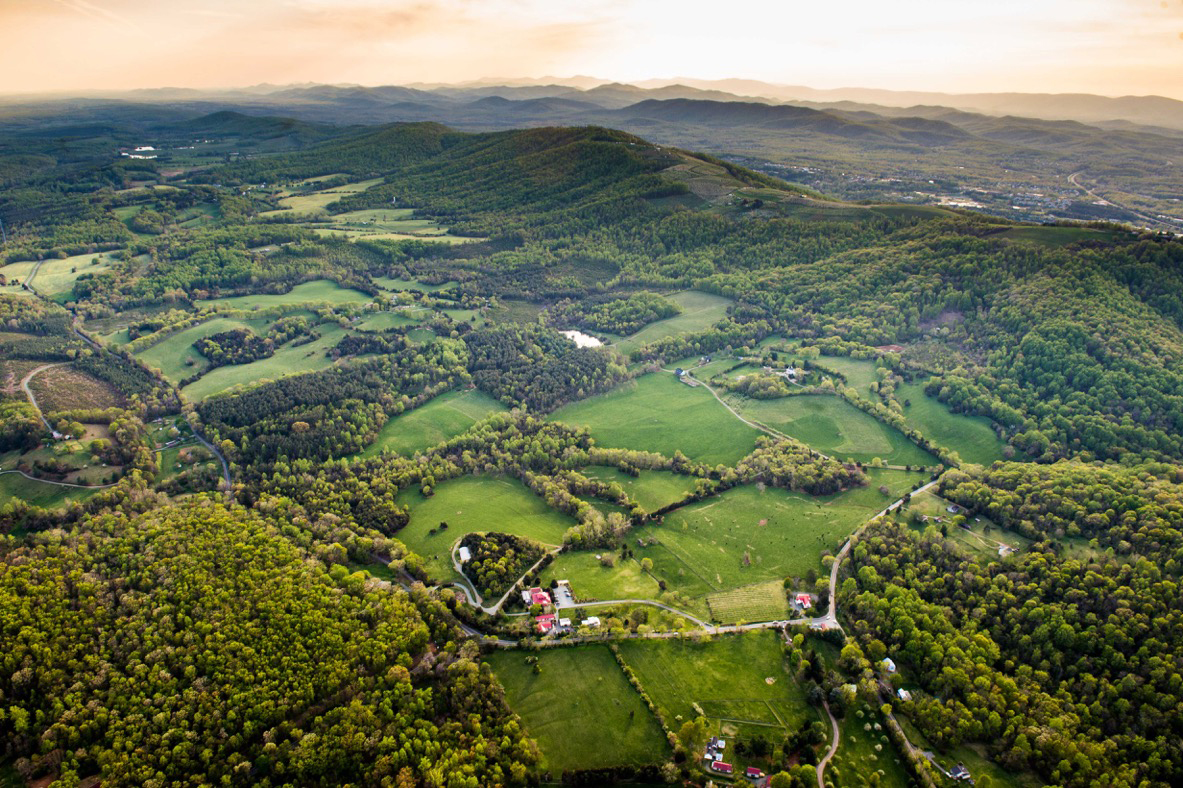
For wine aficionados, the Monticello Wine Trail offers a delightful journey through Virginia's wine country. Located around Charlottesville, this trail encompasses over 30 wineries, each offering unique blends and beautiful vistas. The region's rolling hills and mild climate make it ideal for viticulture, and many of the wineries offer tours and tastings.


Old Town Alexandria

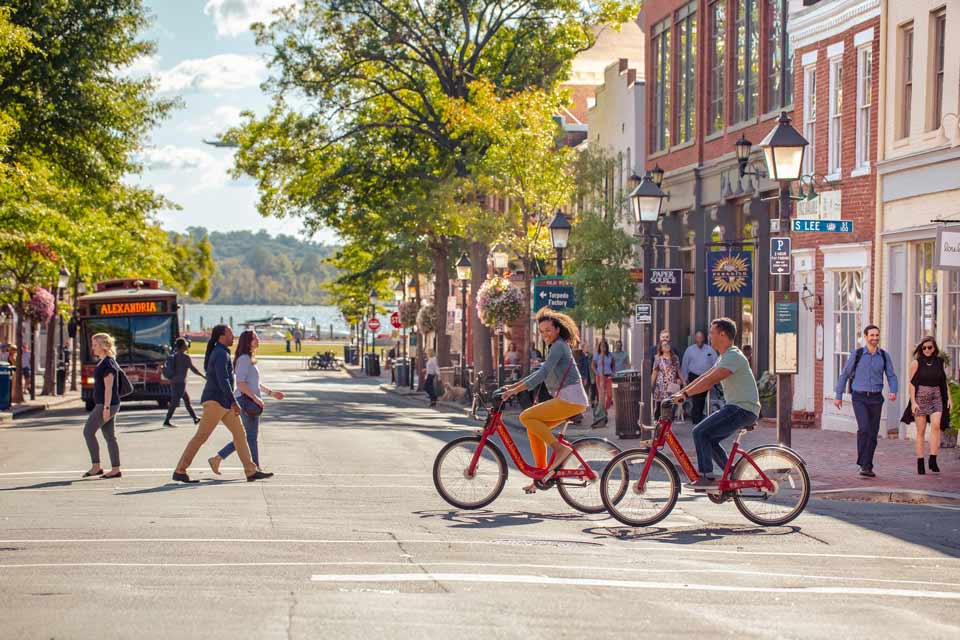
Just across the Potomac River from Washington, D.C., Alexandria is known for its well-preserved 18th- and 19th-century architecture and vibrant Old Town. King Street, the main thoroughfare, is lined with boutiques, restaurants, and antique shops. The waterfront area provides beautiful views and is a hub of activity, especially during the warmer months.


Luray Caverns

Explore the largest caverns in the eastern United States at Luray Caverns. These underground wonders feature towering stalactites, mirror-like pools, and the Great Stalacpipe Organ, an incredible natural musical instrument that produces hauntingly beautiful sounds.


Richmond

As the capital of Virginia, Richmond is a vibrant city full of historic landmarks, museums, and a thriving arts scene. Visit the Virginia Museum of Fine Arts, stroll along the James River, and explore Shockoe Bottom, one of the oldest neighborhoods in the state.


Assateague and Chincoteague Islands

For a unique coastal escape, visit Assateague and Chincoteague Islands. These barrier islands are famous for their wild ponies, beautiful beaches, and scenic trails. The Chincoteague National Wildlife Refuge is a great place for birdwatching and nature photography.


Lake Moomaw

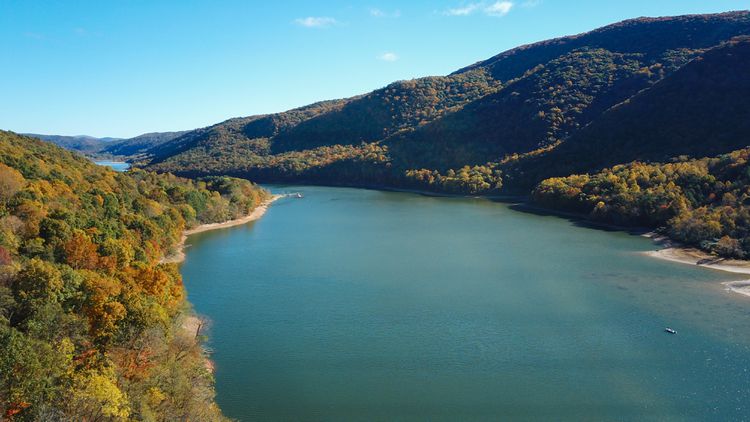
For those seeking natural beauty and outdoor recreation, Lake Moomaw is a hidden gem. Known for its clear, blue-green waters, the lake is ideal for fishing, boating, and camping. Surrounded by the Allegheny Highlands and the George Washington National Forest, it offers a serene escape from the hustle and bustle.


Virginia Beach

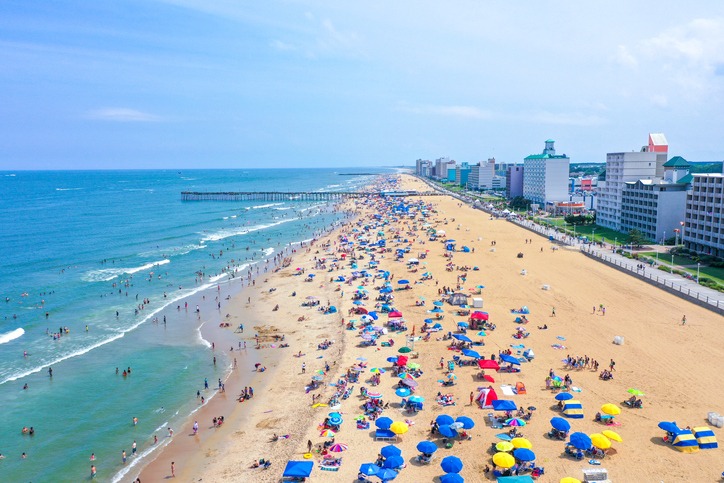
If you’re looking for sun, sand, and ocean waves, Virginia Beach is the perfect spot. With its long boardwalk, lively entertainment scene, and delicious seafood restaurants, this coastal city is a great destination for families, couples, and solo travelers alike.

Posted in Buying a Home
March 5, 2025

Moving to Virginia? A Relocation Guide for 2025


Are you considering a move to Virginia? Whether you're relocating for work, family, or a change of scenery, Virginia offers a unique blend of history, natural beauty, and modern amenities. From bustling metropolitan areas to picturesque coastal towns and charming countryside, Virginia has something for everyone. This guide will explore what makes Virginia an ideal place to call home and what you need to know before making the move.

Why Move to Virginia?

Virginia consistently ranks as one of the best places to live in the United States, thanks to its strong economy, excellent education system, and high quality of life. Here are some top reasons why people choose to move to Virginia:

1. Thriving Job Market
Virginia boasts a diverse and robust job market, with strong industries in technology, government, healthcare, and defense. Northern Virginia, in particular, is home to numerous government contractors, IT companies, and Fortune 500 corporations. The state's unemployment rate is lower than the national average, and future job growth is predicted to be positive. 

2. Rich History and Culture
As one of the original 13 colonies, Virginia is steeped in American history. From Colonial Williamsburg to Civil War battlefields and the homes of several U.S. presidents, there are plenty of historical sites to explore.

3. Excellent Education System
Virginia is known for its top-rated public and private schools, as well as prestigious universities, including the University of Virginia, Virginia Tech, and William & Mary. If education is a priority for your family, Virginia is a great choice.

4. Natural Beauty and Outdoor Activities
From the Blue Ridge Mountains to the Chesapeake Bay and the Atlantic coastline, Virginia offers stunning landscapes and a variety of outdoor activities. Whether you love hiking, boating, fishing, or skiing, you'll find plenty of opportunities to enjoy nature.

5. Proximity to Major Cities
Virginia's location on the East Coast makes it easy to travel to major cities such as Washington, D.C., New York, and Charlotte. Many parts of Virginia offer the perfect balance of suburban tranquility and urban convenience.

Best Places to Live in Virginia

Virginia offers a range of communities to suit different lifestyles. Here are some of the most popular areas to consider:

  • Northern Virginia (NOVA) – Includes Arlington, Alexandria, and Fairfax County. This region is known for its high quality of life, excellent schools, and close proximity to Washington, D.C.

  • Fredericksburg/Stafford – Located between Richmond and Washington, D.C., this area offers historic charm, excellent schools, and a strong sense of community. It's a great choice for those who want suburban living with easy access to major cities.
  • Richmond – The capital city of Virginia, Richmond boasts a thriving arts scene, historic charm, and a lower cost of living compared to Northern Virginia.

  • Virginia Beach – A great place for those who love coastal living, with beautiful beaches, a family-friendly atmosphere, and a strong local economy.

  • Charlottesville – Home to the University of Virginia, Charlottesville offers a mix of history, culture, and scenic beauty in the foothills of the Blue Ridge Mountains.

Things to Consider Before Moving

Before making the move to Virginia, here are a few practical considerations:

1. Cost of Living
The cost of living in Virginia varies depending on the region. Northern Virginia tends to be more expensive, while areas like Richmond, Roanoke, and Hampton Roads offer more affordable options. For example, the cost of living in Roanoke is 19.1% lower than the U.S. average. 

2. Climate
Virginia experiences four distinct seasons, with hot summers and mild to cold winters. If you enjoy seasonal changes, you'll love living here.

3. Traffic and Transportation
Traffic congestion can be an issue in Northern Virginia, especially for commuters traveling to and from Washington, D.C. However, the state offers a variety of public transportation options, including the Metro system in the D.C. area.

4. Taxes
Virginia has a state income tax, with rates ranging from 2% to 5.75%. Property taxes are relatively low compared to other East Coast states, making homeownership more attractive.

Making Your Move to Virginia

Moving to a new state can be both exciting and overwhelming, but with proper planning, you can ensure a smooth transition. Here are some steps to take:

  • Find a reputable real estate agent – A local expert can help you navigate the housing market and find the perfect home.

  • Visit your desired area – Spend some time exploring different cities and neighborhoods to determine the best fit for your lifestyle.

  • Prepare for the move – Organize your belongings, hire professional movers, and update your address with necessary institutions.

  • Get to know your new community – Join local groups, attend events, and explore nearby attractions to settle into your new home.

Final Thoughts

Virginia offers an incredible mix of history, culture, economic opportunities, and natural beauty, making it an excellent choice for individuals and families alike. Whether you're drawn to the vibrant city life, the coastal charm, or the peaceful countryside, you'll find a place that feels like home in Virginia. If you're ready to make the move, start exploring your housing options today and take the first step toward your new adventure in the Old Dominion State!

Posted in Buying a Home
March 5, 2025

Hidden Costs When Buying a Home: A Complete Guide


Buying a home is an exciting milestone, but it’s also one of the most significant financial commitments you’ll make. While most buyers focus on the listing price, there are several hidden costs that can catch you off guard if you’re not prepared. To help you budget accurately and avoid surprises, here’s a comprehensive guide to the hidden costs of buying a home.

1. Closing Costs

Closing costs typically range from 2% to 5% of the home’s purchase price and include a variety of fees, such as:

  • Loan Origination Fees: Charged by the lender for processing your mortgage.
  • Appraisal Fee: Usually costs $300–$600 to determine the home’s market value.
  • Title Insurance & Title Search: Protects against ownership disputes, costing around $1,000 or more.
  • Attorney Fees: Some states require an attorney for closing, adding $500–$1,500 to your bill.
  • Escrow Fees: Paid to the escrow company handling the transaction.

2. Home Inspection Costs

A home inspection is crucial to identify potential issues before you finalize the purchase. A general inspection costs around $300–$500, but specialized inspections (like mold, radon, or termite inspections) could add several hundred dollars more.

3. Property Taxes

Property taxes vary by location and are often paid upfront at closing. Depending on your state and municipality, property taxes can be 1% to 3% of the home’s value per year.

4. Homeowners Insurance

Lenders require homeowners insurance, which typically costs $1,000–$2,500 per year, depending on location, home size, and coverage. If you live in an area prone to floods, earthquakes, or hurricanes, additional coverage may be required.

5. Private Mortgage Insurance (PMI)

If you put down less than 20%, lenders usually require PMI, which protects them in case you default. PMI can cost 0.3% to 1.5% of your loan amount per year, adding hundreds to your monthly mortgage payment.

6. Moving Expenses

Moving costs vary based on distance and household size. Hiring professional movers can range from $1,000 to $5,000, while DIY moving costs still include truck rentals, gas, and packing supplies.

7. HOA Fees (If Applicable)

If you buy a condo or a home in a planned community, you might have to pay Homeowners Association (HOA) fees, which range from $100 to $500 per month (or more) depending on amenities and services.

8. Utility and Maintenance Costs

Your monthly expenses don’t stop at mortgage payments. Factor in:

  • Utilities: Electricity, water, gas, internet, and trash collection could cost $200–$500 per month.
  • Repairs & Maintenance: Experts recommend budgeting 1% to 3% of your home’s value annually for unexpected repairs.
  • Landscaping & Lawn Care: If you hire professionals, expect to pay $50–$200 per visit.

9. Furniture & Renovations

Even if the home is move-in ready, you may need new furniture, appliances, or small upgrades. Initial furnishing and decorating costs can easily add up to thousands of dollars.

10. Pest Control & Home Security

If your new home has pest issues, extermination costs can range from $100 to $500 per visit. Additionally, home security systems and monitoring services can cost between $20–$50 per month.

How to Prepare for Hidden Costs

To avoid financial strain:

  • Create a detailed budget that includes all possible hidden costs.
  • Save a buffer fund (3–6 months of living expenses) for unexpected expenses.
  • Work with a real estate professional who can guide you through potential costs before closing.

By being aware of these hidden costs and planning accordingly, you can make your home-buying journey smoother and financially secure.

Are you ready to find your dream home? Contact us today to get expert guidance and avoid unexpected financial pitfalls!

Posted in Buying a Home
Jan. 31, 2025

Moving to Virginia from Out of State: How I Can Help Make It Seamless


Relocating to Virginia? Here’s How I Make It Seamless

Relocating to a new state is an exciting journey, but it can also feel overwhelming. Whether you're moving for work, family, or a fresh start, having the right guidance can make all the difference. As your trusted local Virginia realtor, I specialize in making long-distance moves as smooth and stress-free as possible.


Real Client Experiences: A Smooth Move from Afar

From Texas to Virginia: A 1,500-Mile Move

“Absolutely the best!! She has been there for us every step of the way. We moved over 1,500 miles, and she always took the time to help with everything. Since we couldn't see houses in person, she looked in every nook and cranny and gave us honest opinions. Even after moving, she helped us find utility companies and local services. We are still in contact four months after signing—it has been wonderful! We love our new house, our new city, and we still call her when we need help with things! Such a great agent and an amazing person!” — Connie C.

Purchasing While Overseas: A Hassle-Free Experience

“Simply the best realtor I have ever used! Naomi handled everything, even repairs before I moved in. She was incredibly responsive, provided listings that fit my budget, and even worked with other agents to find off-market properties. Living overseas made this process challenging, but she made it effortless. I wish all my realtors were as fast-acting and forward-thinking as her.” — Carl L.


How I Make Your Out-of-State Move Easy

1. Virtual Tours & Honest Insights

Can’t be here in person? No problem! I provide detailed virtual tours, pointing out every detail—the good, the bad, and everything in between. My goal is to give you a clear, transparent view of each property so you can make informed decisions from afar.

2. Local Expertise

From neighborhood vibes to school districts and commute times, I provide insights beyond what you’ll find in listings. Whether you’re looking for a bustling city atmosphere or a quiet suburban neighborhood, I help you find the perfect fit for your lifestyle.

3. Utility & Service Setup Guidance

Moving to a new state comes with the challenge of setting up utilities, internet, and other essential services. I offer recommendations and contacts for local providers to make your transition as seamless as possible.

4. Trusted Home Inspector

I work with a highly experienced home inspector with 14 years as a construction superintendent, having built 467 homes. His background as a firefighter also gives him a keen eye for safety issues. This ensures that your home is not only beautiful but also structurally sound and secure.

5. Continued Support Post-Move

My support doesn’t end at closing. Whether you need a reliable handyman, restaurant recommendations, or local service providers, I remain your go-to resource even after you’ve settled in.

6. Stress-Free Process

From coordinating with inspectors and negotiating on your behalf to handling paperwork and keeping you updated at every step, I take care of the details so you can focus on the excitement of your move.


Keeping Your Costs Low: Home Insurance & Title Companies

I understand that moving involves financial considerations, which is why I connect my clients with top-tier home insurance and title companies that offer competitive rates. My trusted partners ensure you get the best service without breaking the bank.


Ready to Make Virginia Your Home?

If you're considering a move to Virginia from out of state, let’s chat! I’m here to guide you through the process, answer all your questions, and ensure your move is as smooth and stress-free as possible.

📞 540.500.9533
📧 realtornaomihoehn@gmail.com
🏡 540.500.9533

Posted in Buying a Home